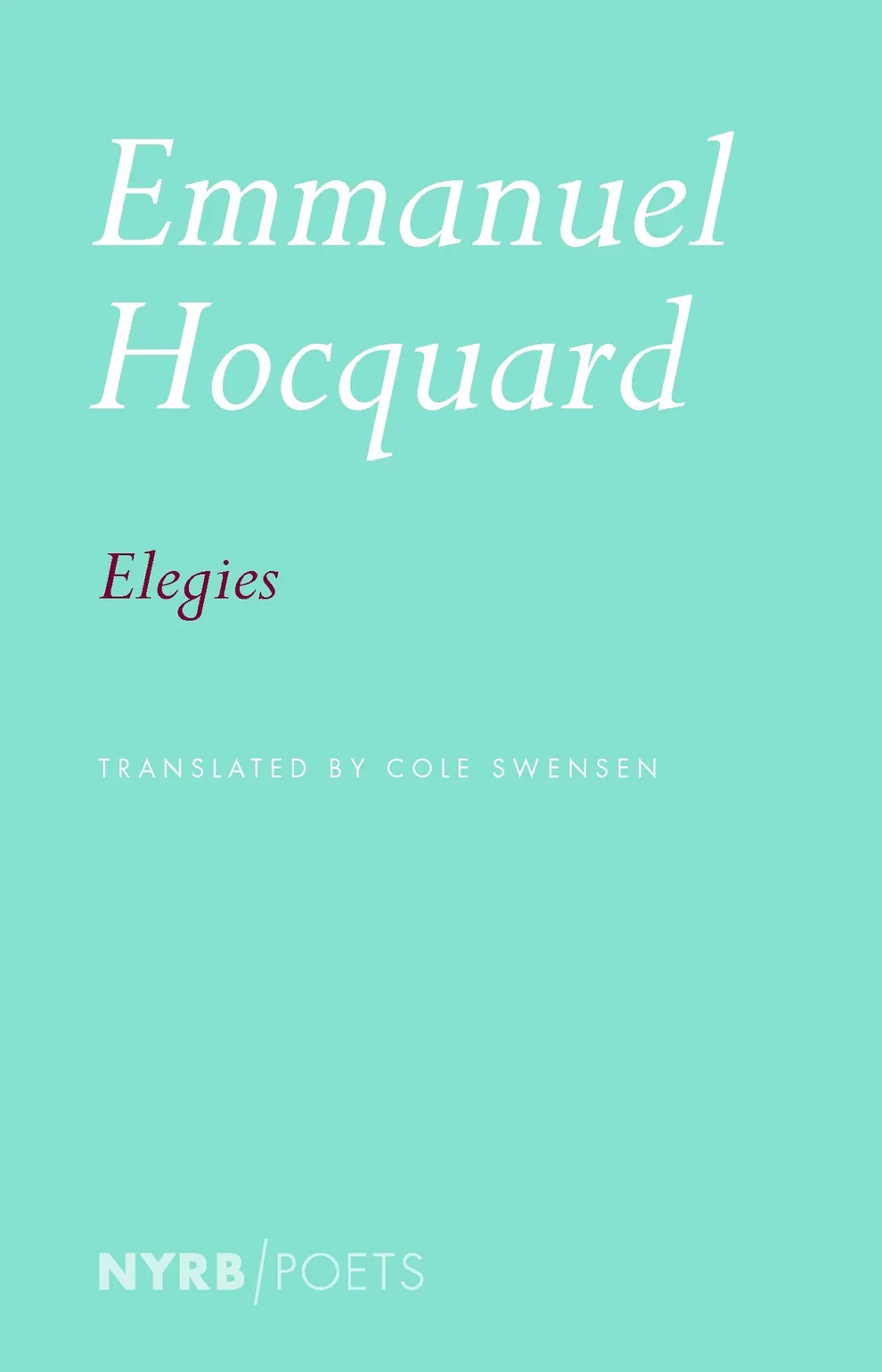
Hocquard’s Elegies could be considered the core of his œuvre. Written over some twenty-five years, they trace an expressive thread throughout the whole as they wander through a capacious past. But whose past is it? And to whom does the past, in general, belong?
Hocquard seems to suggest that, like air and water, the past is a commons shared by all, for while these works are studded with vivid autobiographical glimpses, they also sweep through wide swaths of the ancient world as well as contemporary markets, streets, and other public places, overhearing conversations and capturing quotidian details.
In his critical writings, Hocquard has distinguished between two types of the elegiac poet—the classic and the inverse. He goes on to say that the classic ruminates on the past while the inverse remakes it. They both love anecdote, he says, but for the classic, anecdote saves a memory from oblivion, while for the inverse, it is a tiny clue that opens up a new path, a path toward the present. Hocquard is clearly an inverse elegiac poet; his Elegies are full of rich anecdotes. They all lead us to an ever-expanding present.
Link to the book